bunq — Continuous UX Research & Experience Optimization
Improving core banking flows through AI-assisted usability testing, structured audits, and continuous research operations
Project Overview
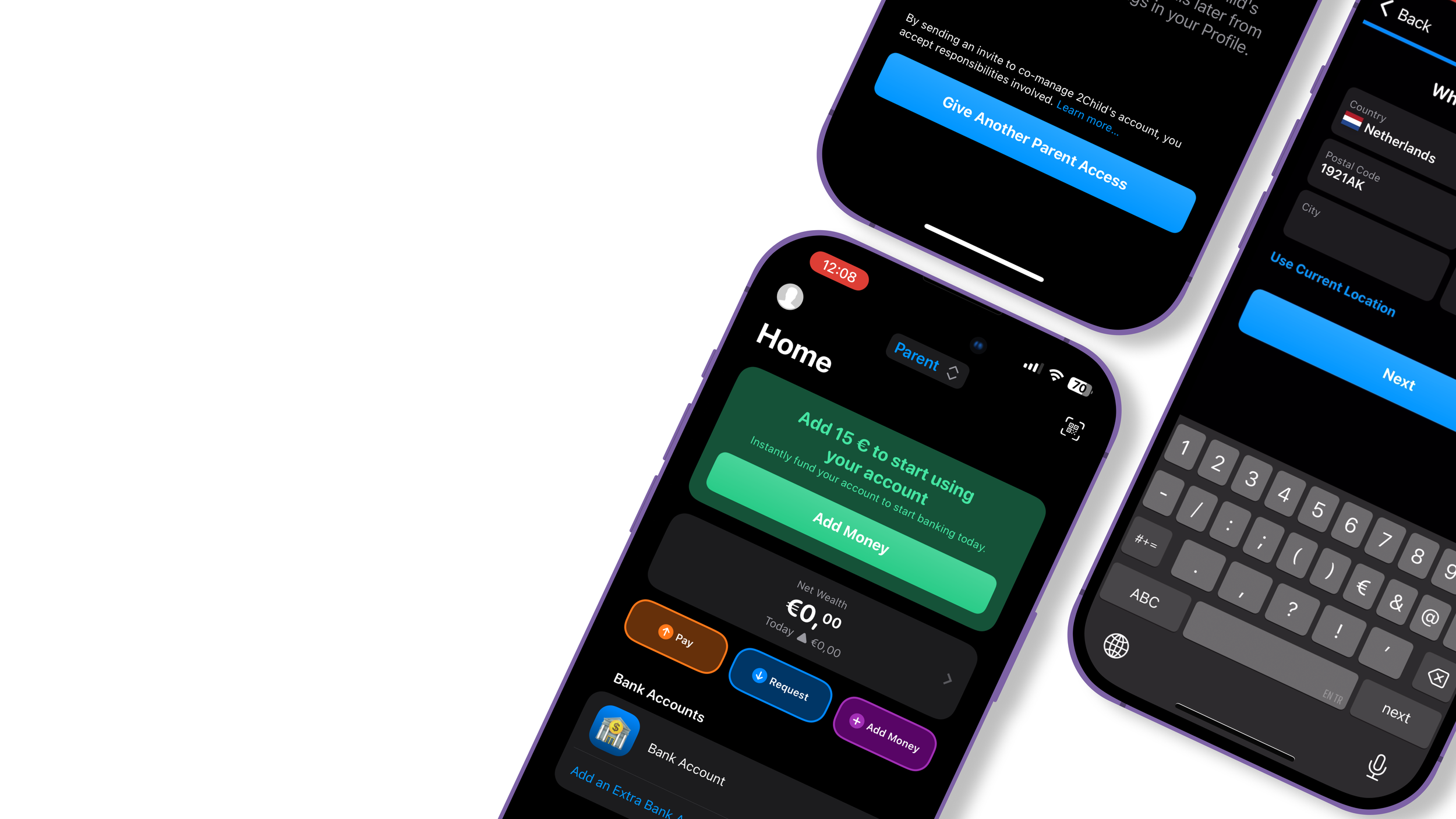
bunq is a live digital banking product serving end users across Europe. Within bunq's Product Analytics team, my role combines traditional UX research — usability testing, audits, and behavioral analysis — with AI-assisted workflows I built to scale insight generation across iOS, Android, and Web.
Unlike a traditional design project, this work is centered on research, validation, quality control, and measurable UX optimization — increasingly powered by AI-driven automation rather than manual review alone.
Client: bunq (Dutch Neobank)
Platform: iOS, Android, Web
Year: 2025 – Ongoing
Role: UX Researcher, Product Analytics Team
The Challenge
bunq operates as a live digital banking product with frequent feature releases and cross-platform updates. This creates several challenges:
Drop-offs in critical onboarding and activation flows
Platform inconsistencies between Android, iOS, and Web
UX gaps caused by rapid iteration cycles
Friction in high-trust interactions (ID verification, payments, account closure)
Need for research-backed roadmap prioritization
The goal is not redesigning from scratch — but continuously improving a live system without disrupting product velocity.
Selected Example
Sign-Up Flow Drop-Off
Issue
High drop-offs (30%) during onboarding and ID verification.
Data
Funnel analysis showed abandonment at ID step.
9/20 users expressed distrust in early promotional screens.
7/20 users needed more context before commitment.
Findings
Lack of upfront clarity.
Insufficient progress feedback.
Inconsistent ID scanning behavior across platforms.
Recommendations
Add contextual onboarding explanation before phone input.
Improve error states & progress indicators.
Standardize ID interaction patterns.
Improvement
ID verification drop-offs reduced by ~9%
Improved onboarding completion rate ~4%
My Responsibilities
AI-Assisted Workflow Design: Building and maintaining automated testing systems (Claude + n8n) that scale research operations beyond manual capacity
Usability Testing: Weekly moderated & unmoderated tests across core flows
UX Audits: Heuristic & accessibility audits across platforms
Cross-Platform Reviews: Systematic Android / iOS / Web comparison
Data Monitoring: Funnel drop-offs, conversion rates, feature adoption, flow abandonment points
Reporting & Alignment: Structured reports influencing roadmap decisions
Impact Snapshot (2025 -)
80% of detected UX/UI bugs resolved within 12 weeks via AI-assisted testing
UX audit issue recurrence reduced ~45% quarter-over-quarter
Android cross-platform inconsistencies reduced ~25%
Research insights directly influenced roadmap decisions
Contributed to Android Design System maturity and bunq's AI-first initiative
AI-Assisted Research at Scale
To keep pace with bunq's release velocity, I designed and built an automated UX/UI testing system using Claude and n8n, bridging manual usability research with AI-driven workflow automation.
What it does:
Continuously scans flagged flows for UX/UI inconsistencies across platforms
Surfaces bugs and design deviations ahead of broader QA review
Structures findings into severity-tagged reports for design and engineering teams
Impact: resolved 80% of detected UX/UI bugs within 12 weeks of launch — turning ad hoc bug-catching into a repeatable, scalable research operation, and contributing to bunq's broader AI-first initiative.
NDA & Confidentiality Notice
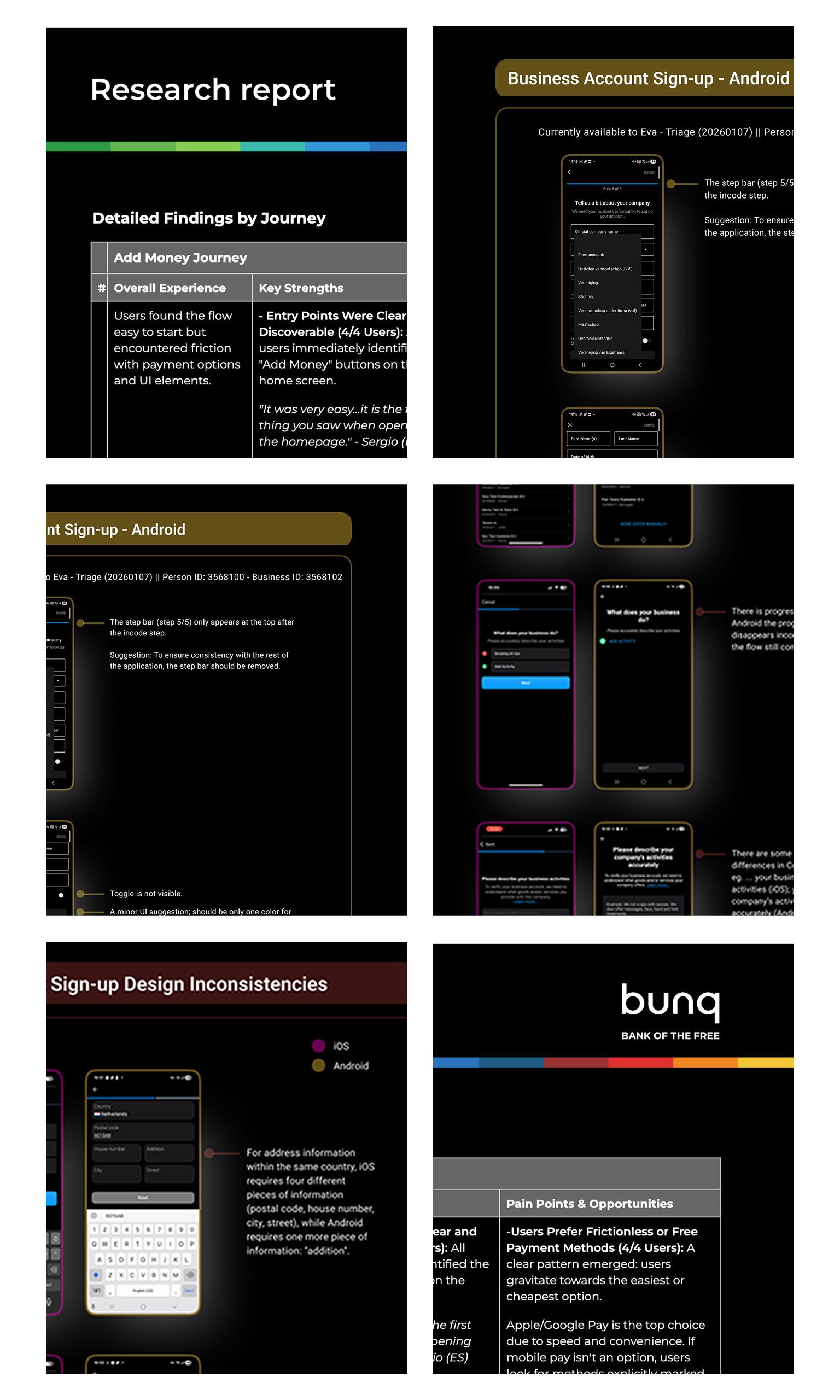
Due to company policy and the live nature of the product, detailed product screens, internal tools, and proprietary data cannot be publicly shared.
The metrics and examples presented here are representative of the type of impact delivered. I would be happy to discuss deeper insights, processes, and additional case details during a private conversation.