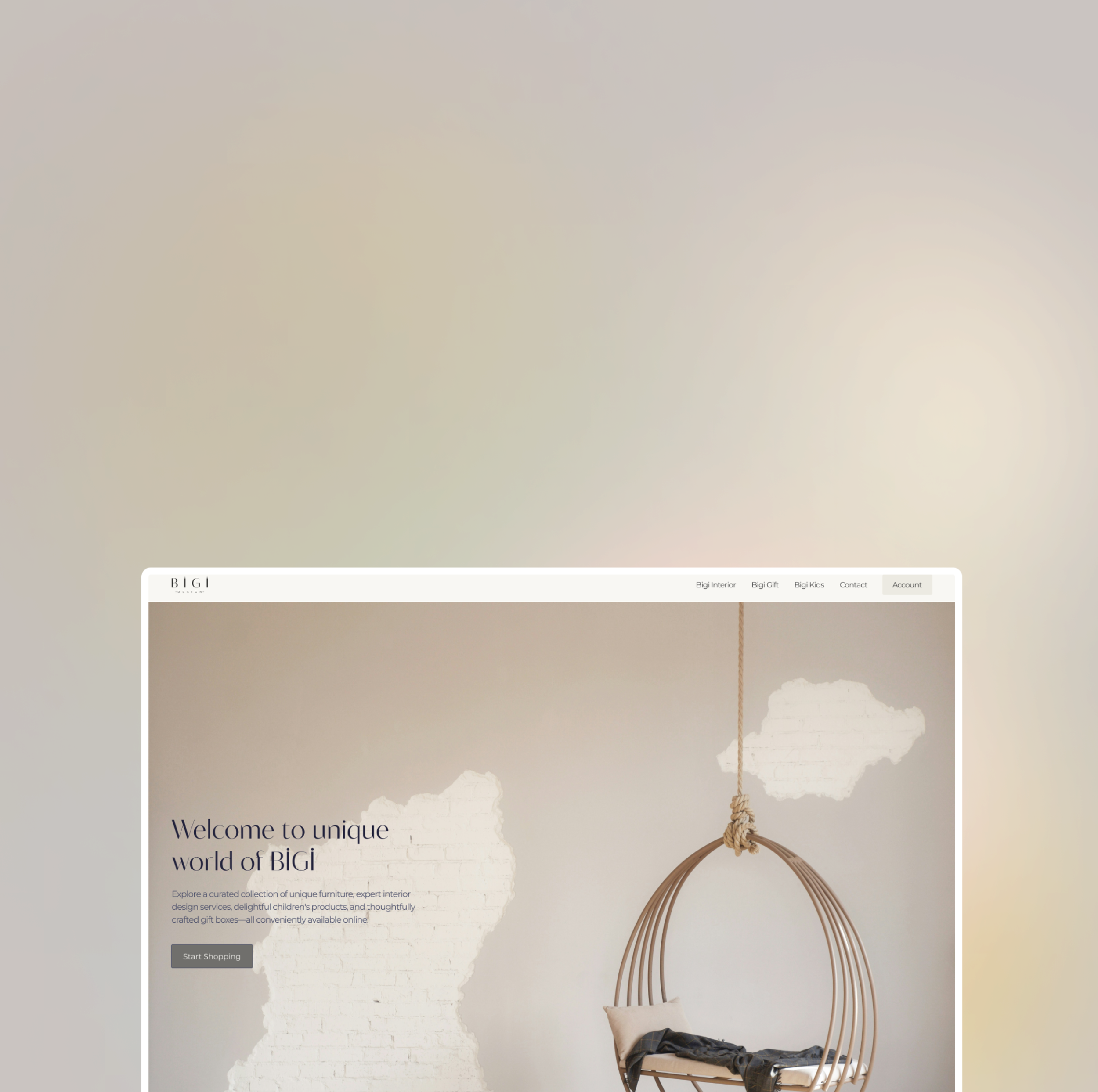
Designing a Scalable E-commerce Foundation for BIGI
An early-stage UX/UI project structuring a multi-category e-commerce experience for an interior design brand entering digital retail for the first time
Project Overview
BIGI is an interior design company expanding into e-commerce. This project designs a scalable web platform bringing together four distinct offerings — interior design services, furniture, gift products, and children's clothing and toys — under a single, cohesive shopping experience.
While outside fintech, this project reflects the same research-first, systems-driven approach I bring to complex products: validating structure through user research before scaling it.
Client: BIGI Design
Platform: E-commerce (Web)
Year: 2025 — Ongoing
Design Strategy
The design strategy centered on creating a modular and scalable system that could evolve alongside the business.
Key strategic principles included:
Clear category separation with shared navigation patterns
Consistent UX foundations adaptable to future categories
Reduced cognitive load through predictable layouts and hierarchy
This approach ensured that users could navigate across services seamlessly while allowing the platform to expand without structural redesign.
Process
Research
To inform early design decisions, I conducted qualitative research and competitive analysis.
User Interviews
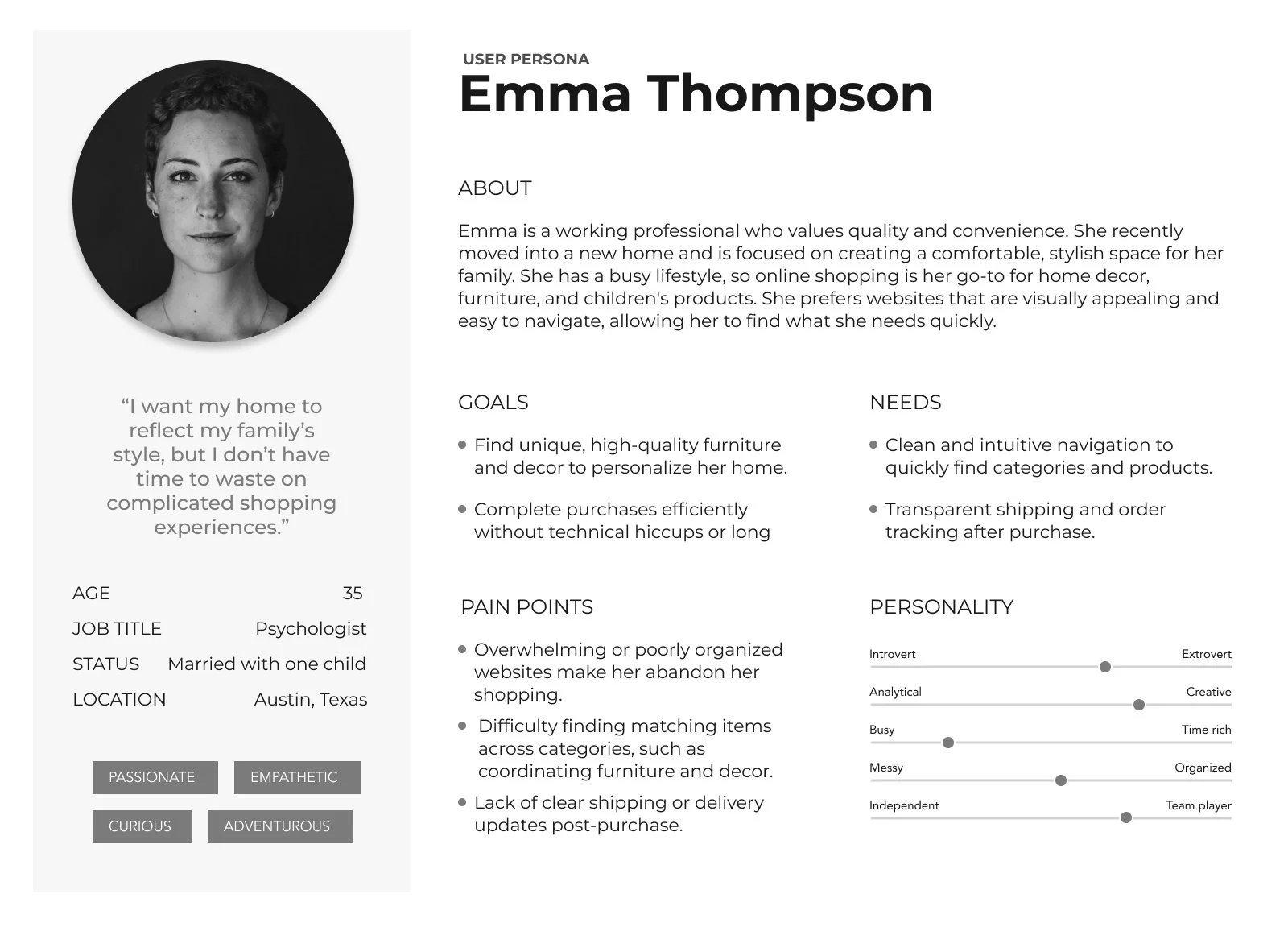
5 semi-structured interviews with users representative of BIGI’s target audience, including individuals interested in interior design products and parents shopping for children’s items.
Research goals:
Understand how users navigate multi-category e-commerce platforms
Identify friction points in product discovery and checkout
Explore expectations around saving items and post-purchase actions
Key insights:
Users expect clear separation between categories to avoid feeling overwhelmed
Filtering and comparison play a critical role in purchase decisions
Checkout speed and transparency strongly influence purchase confidence
Impact on design:
Informed the decision to use persistent navigation and clear category labels
Shaped the prioritization of saved items and simplified checkout flows
The Challenge
This project began without existing e-commerce patterns, historical user data, or a defined content structure. As BIGI’s first digital retail initiative, the primary challenge was to design a clear, scalable foundation capable of supporting multiple categories, different user intents, and a phased rollout strategy.
Early UX decisions needed to balance:
Diverse product types and audiences
Navigation clarity across categories
Long-term scalability without redesign
My Role
I worked as the UX/UI Designer, leading the project from early research through high-fidelity UI design.
My responsibilities included:
Conducting user and market research
Defining information architecture and user flows
Designing low- to high-fidelity wireframes
Creating a cohesive visual language aligned with the brand
Collaborating closely with the client and development team
Ideation & Structure
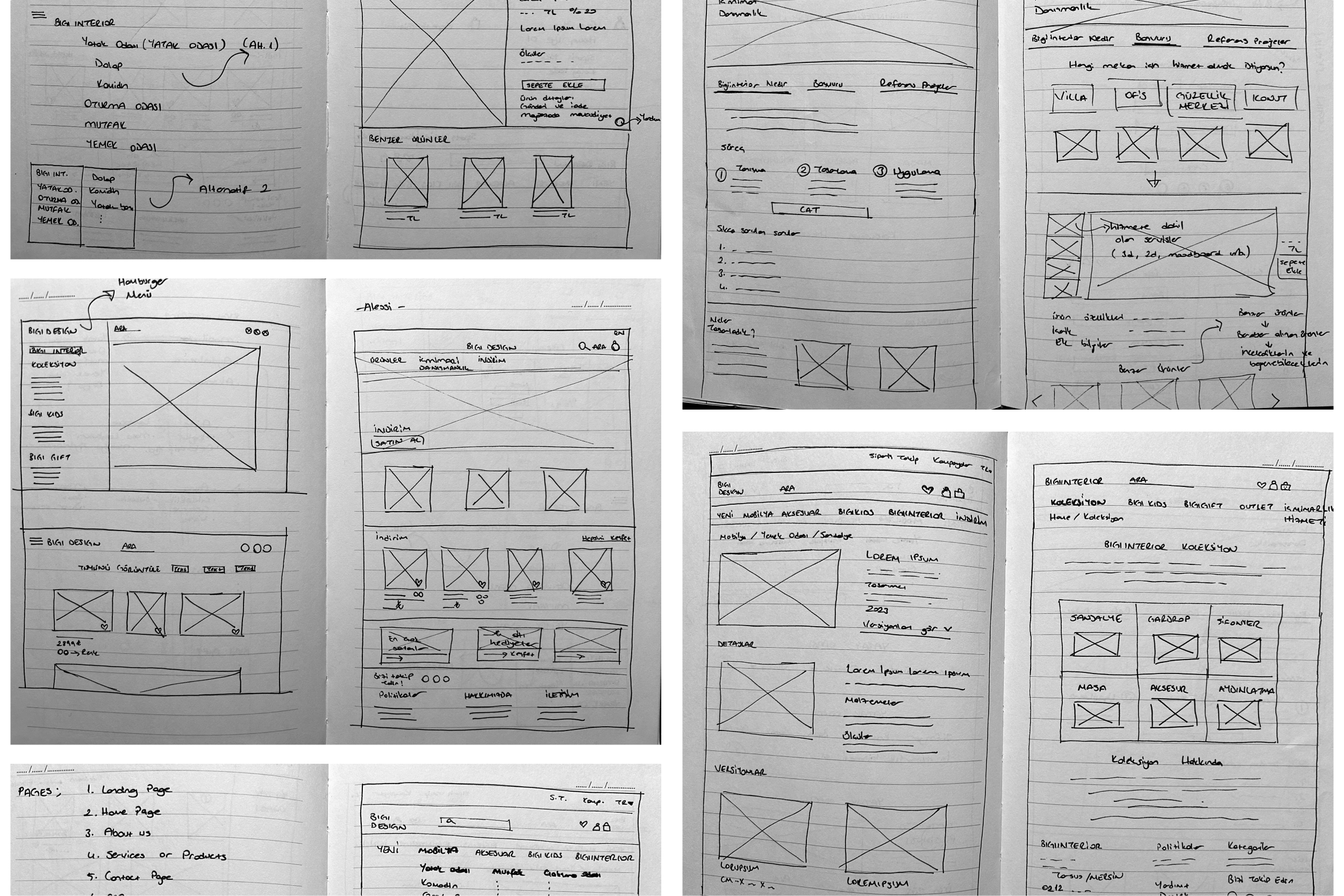
Based on research insights, I explored multiple layout and navigation concepts through low- and mid-fidelity wireframes.
Key decisions included:
Persistent navigation to support cross-category exploration
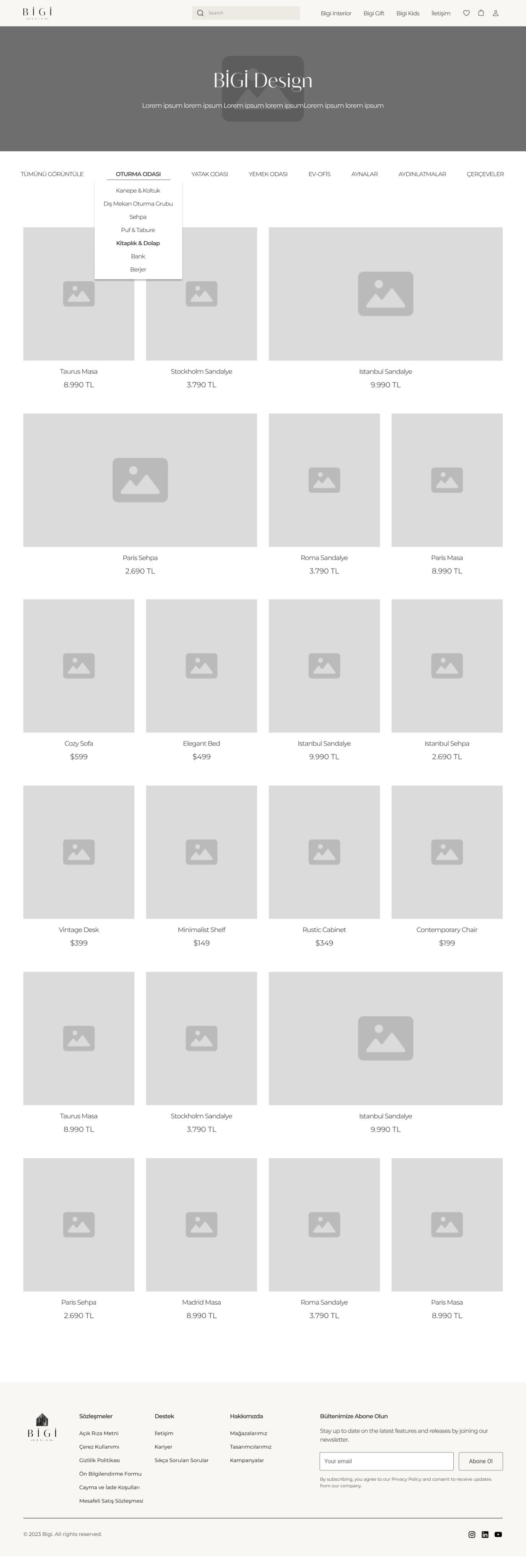
Flexible product grids adaptable to different content types
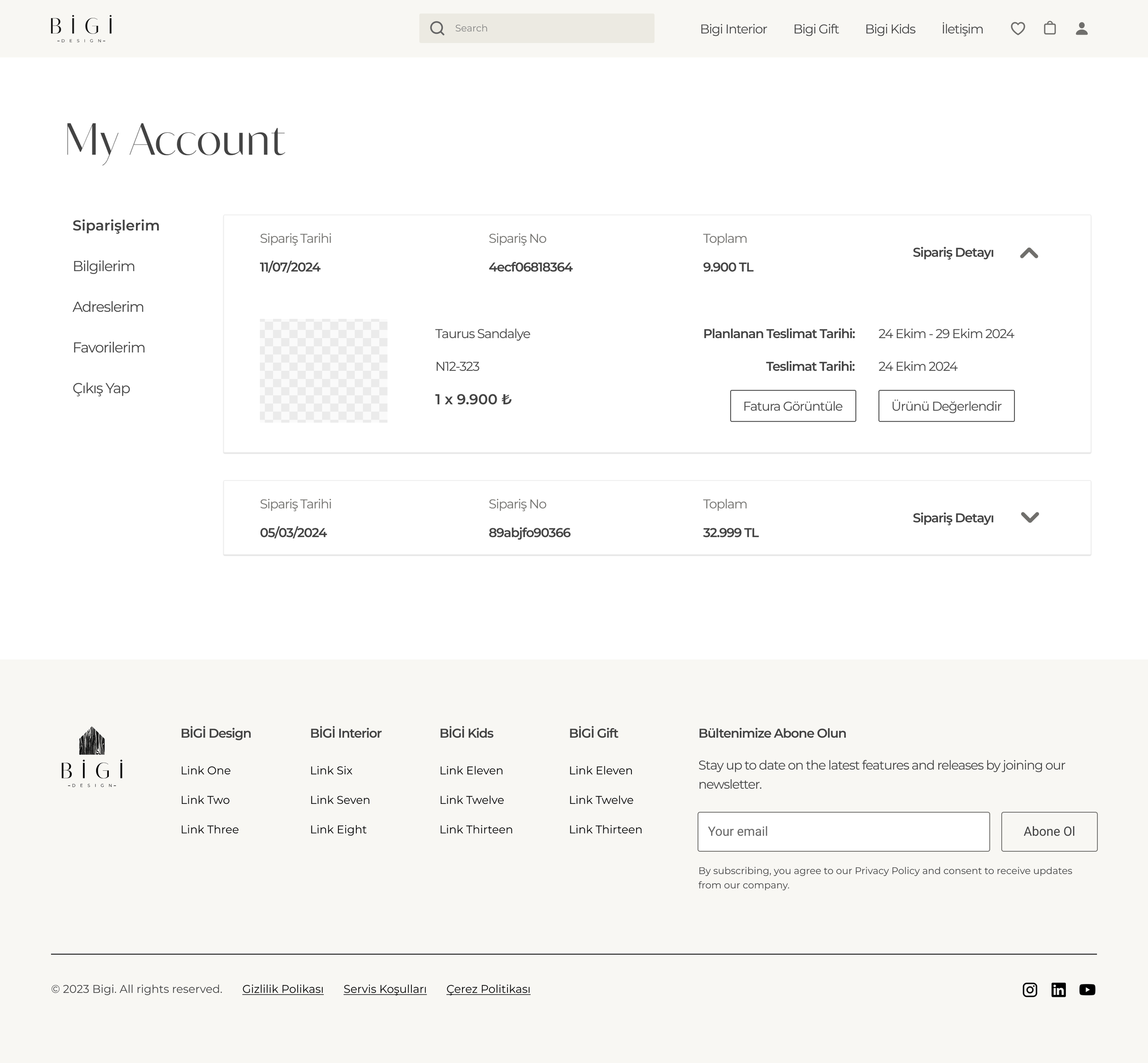
Early definition of post-purchase features such as saved items and order tracking
Wireframes were iterated with the client to validate structure before moving into UI design.
Competitive Benchmarking
Platforms such as Studio McGee, Amber Interiors, and Magnolia were analyzed to identify best practices in navigation structure, product presentation, and checkout flow—particularly for brands selling across multiple categories.
UI Design
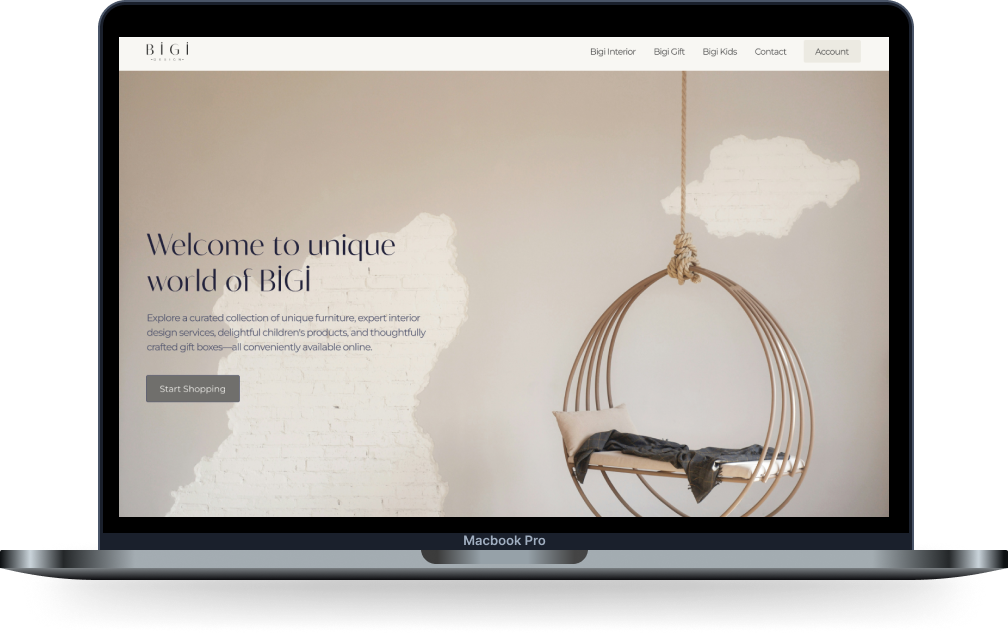
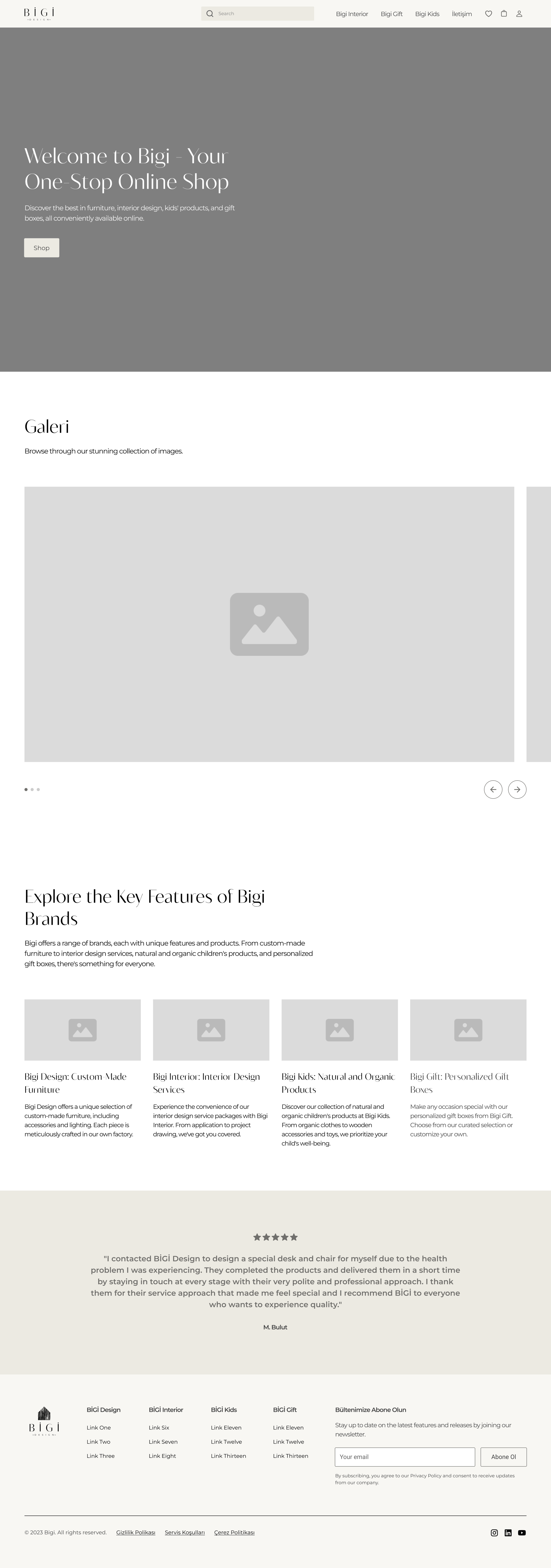
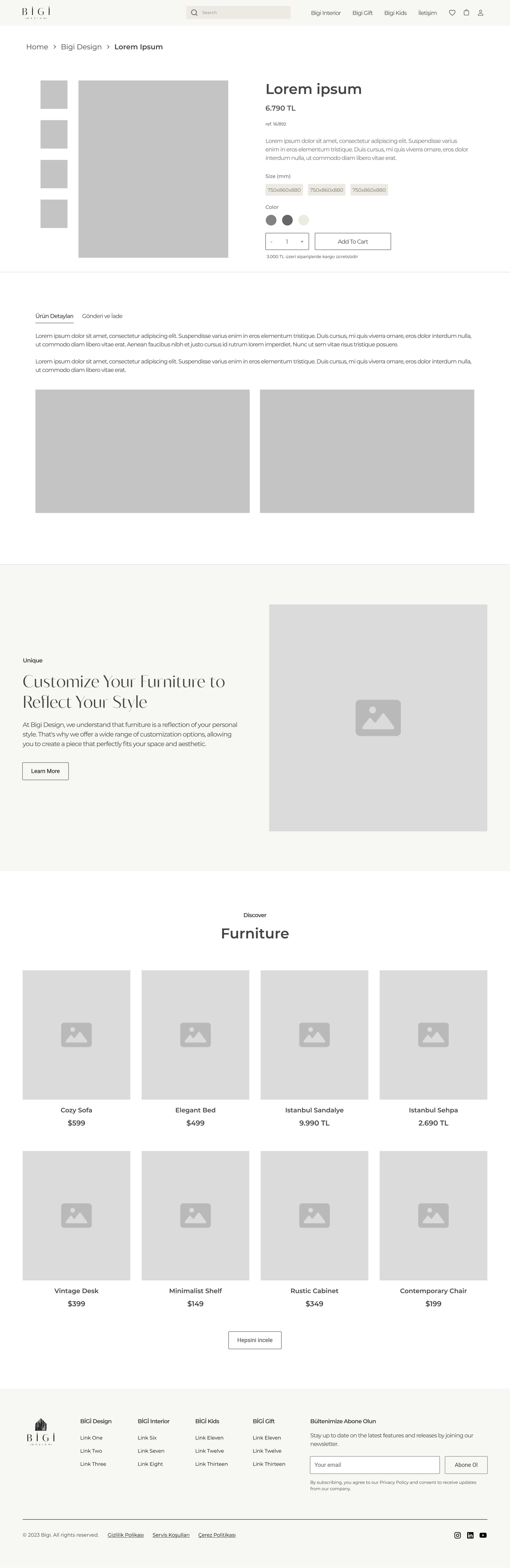
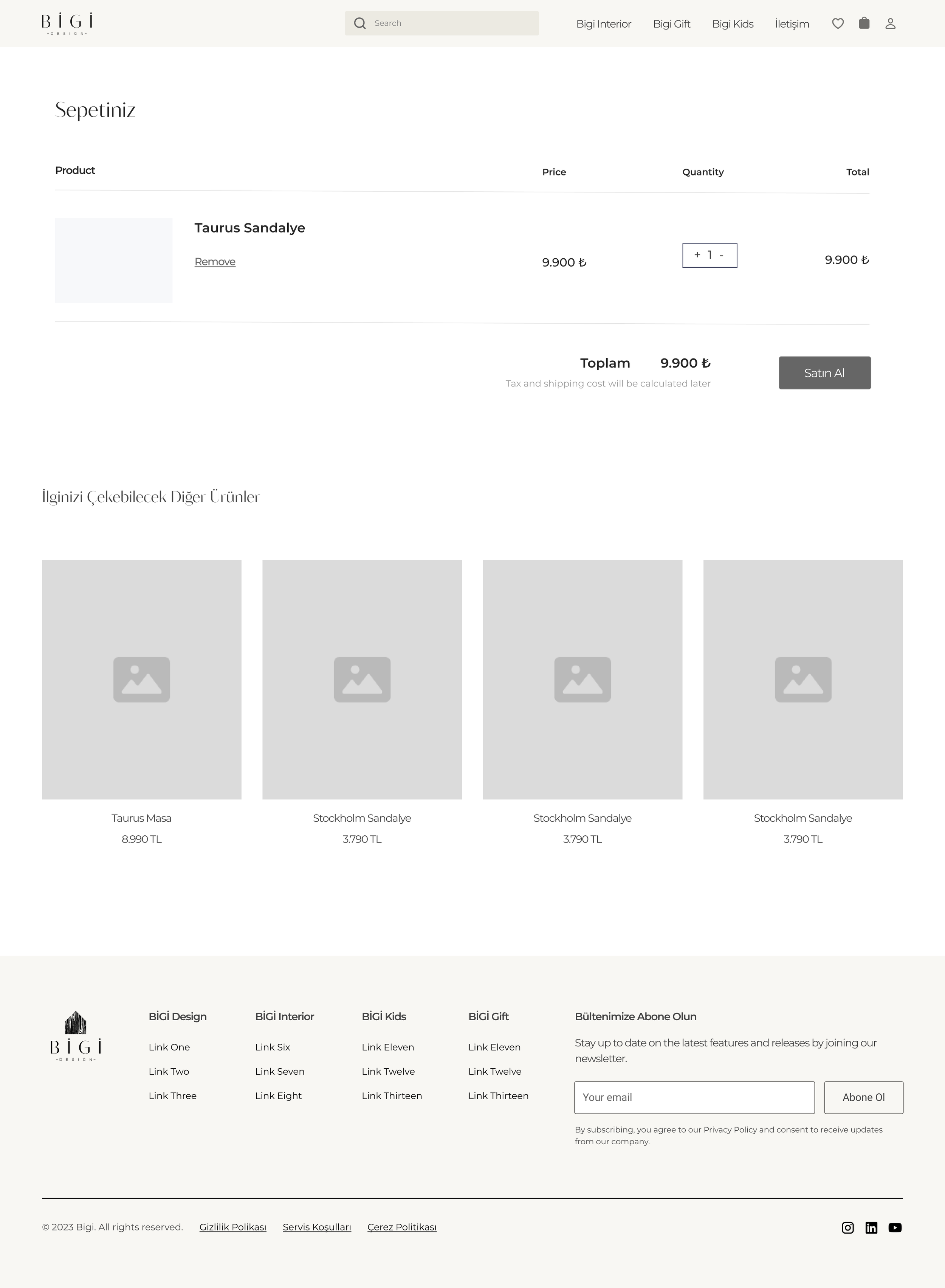
The UI design phase focused on clarity, consistency, and brand alignment.
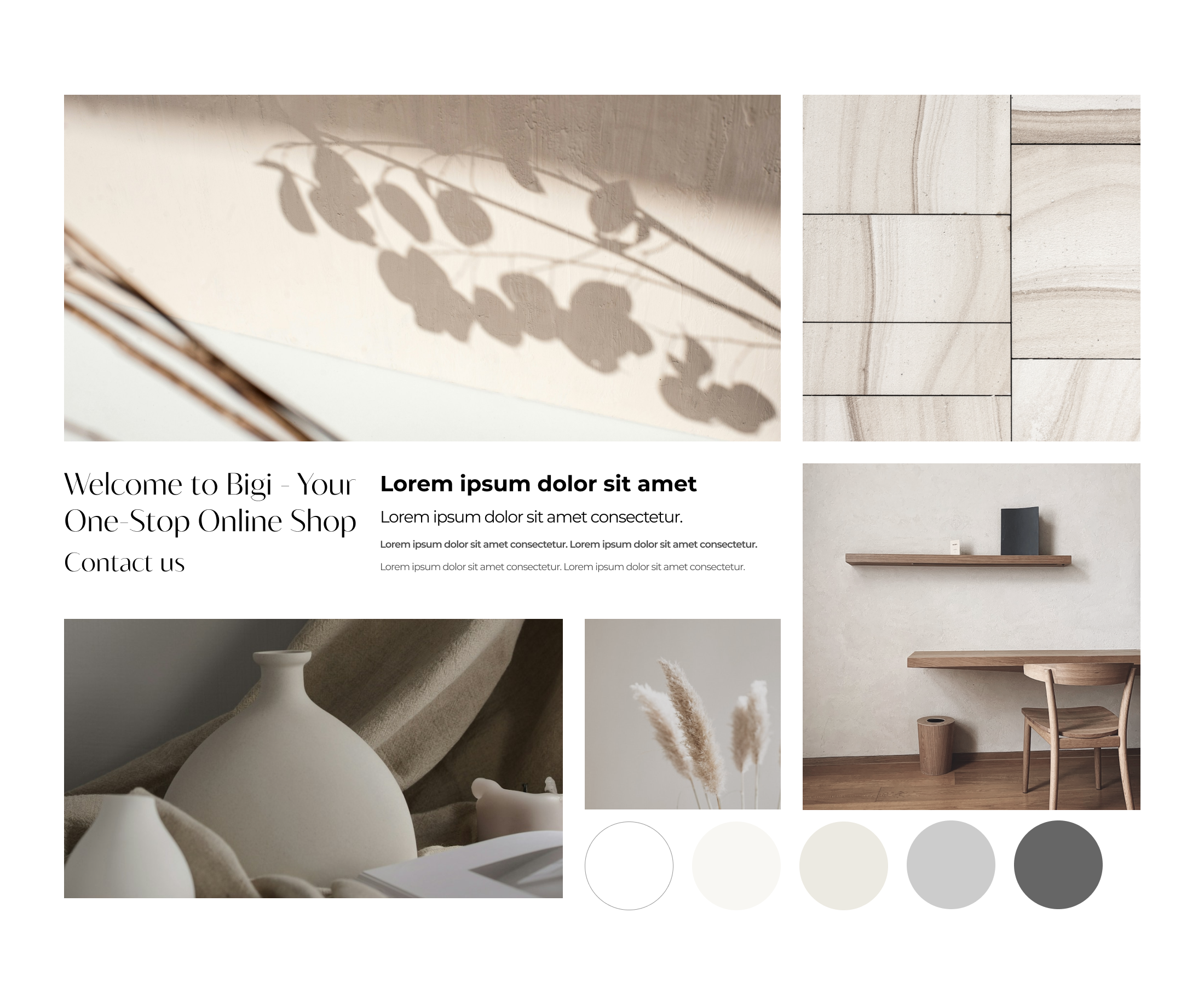
A neutral, minimalist color palette was selected to reflect BIGI’s modern, wood-focused aesthetic
Large product imagery and clean grid layouts were prioritized to support discovery
Clear CTAs and visual hierarchy were used to guide user actions
High-fidelity designs were reviewed and refined collaboratively prior to handoff.
Key Design Challenges
Structuring four distinct categories under one platform:
Addressed through modular layouts, consistent navigation, and clear visual hierarchy.Ambiguity in early client requirements:
Managed through iterative wireframes, visual prototypes, and frequent alignment sessions.Designing for phased rollout and scalability:
Solved by creating reusable components and flexible layout systems.
Outcomes & Current Status
The project is currently in development, following a phased rollout strategy.
Core UX and UI foundations have been finalized
Development has begun with BIGI Design as the first live category
The design system is being prepared to support additional categories as they are introduced
Next Steps
Once implementation reaches usability-ready maturity, usability testing will be conducted using both qualitative and quantitative methods.
Planned focus areas include:
Navigation clarity across categories
Product discovery and filtering behavior
Checkout efficiency and friction points
Insights from testing will inform iterative refinements prior to full public launch.